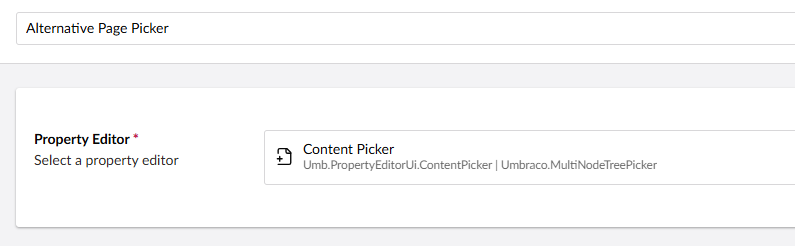
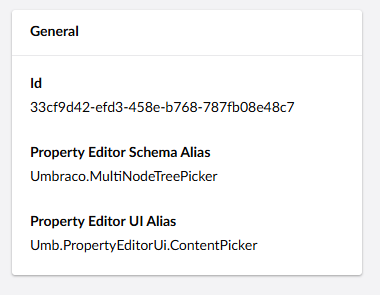
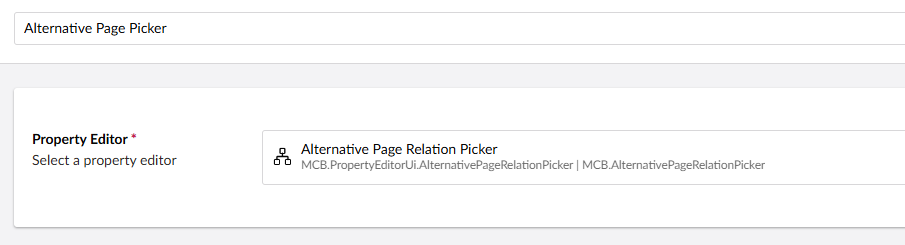
In Umbraco 13 we create a custom property editor, which re-used configuration from MNTP, but a different property editor to implement a different reference via GetReferences() instead of default reference.
In Umbraco 17 it looks something like this:
[DataEditor(
    //name: "Alternative Page Relation Picker",
    alias: Constants.PropertyEditors.Aliases.AlternativePageRelationPicker,
    //view: "contentpicker",
    //Icon = "icon-mindmap",
    ValueType = ValueTypes.Text)
    //Group = Umbraco.Cms.Core.Constants.PropertyEditors.Groups.Pickers)
]
public class AlternativePageRelationPickerPropertyEditor : DataEditor
{
    private readonly IIOHelper _ioHelper;

    public AlternativePageRelationPickerPropertyEditor(
        IDataValueEditorFactory dataValueEditorFactory,
        IIOHelper ioHelper)
        : base(dataValueEditorFactory)
    {
        _ioHelper = ioHelper;
        SupportsReadOnly = true;
    }

    /// <inheritdoc />
    protected override IConfigurationEditor CreateConfigurationEditor() =>
        new MultiNodePickerConfigurationEditor(_ioHelper); // Just reuse the MNTP configuration.

    protected override IDataValueEditor CreateValueEditor() =>
        DataValueEditorFactory.Create<AlternativePageRelationPickerPropertyValueEditor>(Attribute!);

    public class AlternativePageRelationPickerPropertyValueEditor : DataValueEditor, IDataValueReferenceFactory, IDataValueReference
    {
        public AlternativePageRelationPickerPropertyValueEditor(
            IShortStringHelper shortStringHelper,
            IJsonSerializer jsonSerializer,
            IIOHelper ioHelper,
            DataEditorAttribute attribute)
            : base(shortStringHelper, jsonSerializer, ioHelper, attribute)
        {
        }

        public IDataValueReference GetDataValueReference() => this;

        public IEnumerable<string> GetAutomaticRelationTypesAliases() => [Constants.RelationTypes.RelatedAlternativePageAlias];

        public bool IsForEditor(IDataEditor? dataEditor) => dataEditor?.Alias == Constants.PropertyEditors.Aliases.AlternativePageRelationPicker;

        public IEnumerable<UmbracoEntityReference> GetReferences(object? value)
        {
            var asString = value == null ? string.Empty : value is string str ? str : value.ToString();

            if (string.IsNullOrEmpty(asString))
            {
                yield break;
            }

            var udiPaths = asString!.Split(',');

            foreach (var udiPath in udiPaths)
            {
                if (UdiParser.TryParse(udiPath, out Udi? udi))
                {
                    yield return new UmbracoEntityReference(udi, Constants.RelationTypes.RelatedAlternativePageAlias);
                }
            }
        }
    }
}
However view is moved to client side, so we have something like this:
import { MCB_ALTERNATIVE_PAGE_RELATION_PICKER_PROPERTY_EDITOR_UI_ALIAS } from './constants.js';
import { manifest as schemaManifest } from './property-editor-schema.js';

export const manifests: Array<UmbExtensionManifest> = [
	{
		type: 'propertyEditorUi',
		alias: MCB_ALTERNATIVE_PAGE_RELATION_PICKER_PROPERTY_EDITOR_UI_ALIAS,
		name: 'Alternative Page Relation Picker Property Editor UI',
		element: () => import('./alternative-page-relation-picker.element.js'),
		meta: {
			label: 'Alternative Page Relation Picker',
            propertyEditorSchemaAlias: 'MCB.AlternativePageRelationPicker',
            icon: 'icon-mindmap',
			group: 'pickers',
			supportsReadOnly: true,
			settings: {
				properties: [
					{
						alias: 'filter',
						label: 'Allow items of type',
						description: 'Select the applicable types',
						propertyEditorUiAlias: 'Umb.PropertyEditorUi.ContentPicker.SourceType',
					},
				],
			},
		},
	},
	schemaManifest,
];
Is there any way to re-use umb-property-editor-ui-document-picker?
I tried elementName: "umb-property-editor-ui-document-picker", but it seems requiring to import this component, which I think isn’t exported in modules - or if we could create a custom property editor UI extending UmbPropertyEditorUIDocumentPickerElement, but I think this isn’t available in modules either.
We can implement <umb-input-document> as suggested in linked post below and used inside the core property editor UI, but it probably requires to implement much of the same logic.
Is there a better/simpler approach to reuse property editor UI, when one just want a slightly different change backend wise, in this case different implementation of GetReferences() and GetAutomaticRelationTypesAliases() in data value editor?
@warren asked a similar question here: